Listen to the podcast here!

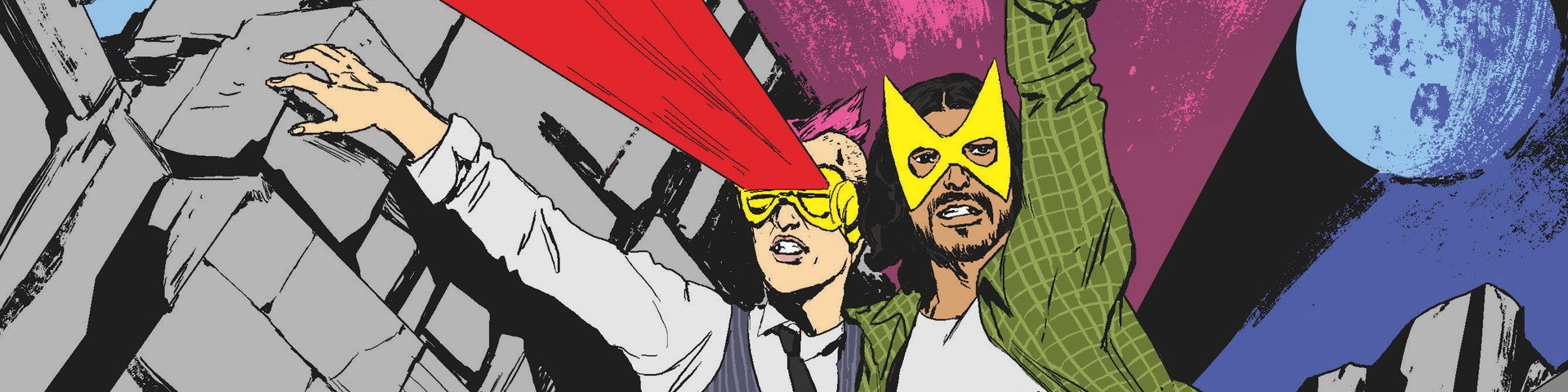
Art by David Wynne. Prints and cards available until 8/9/2015 in the shop (once Redbubble’s uploader starts working again, anyway), or contact David for the original.

Just another 70’s monster comic. You’d never know it was about an X-Man. (Amazing Adventures #11)

Drama, destruction, and slightly off-model mutants. (Amazing Adventures #11)

Flashback to Hank leaving the X-Men. Who knows if he’ll ever come back? (Amazing Adventures #11)

In which Carl Maddicks is a total jerk, and Hank McCoy is very good at science. (Amazing Adventures #11)

Great use of panel borders by Tom Sutton on this page. (Amazing Adventures #11)

The Beast at the height of his invulnerability and his creepiness. (Amazing Adventures #11)

Spectacularly horrific splash page by Tom Sutton and Mike Ploog (Amazing Adventure #12)

The closet’s just more trouble than it’s worth. (Amazing Adventure #12)

A visually striking panel of Iron Man flirting with the Beast. (Amazing Adventure #12)

Don’t panic; nothing on this page is actually happening. (Amazing Adventure #12)

Mastermind is as long-winded as Unus is unimpressed. (Amazing Adventure #13)

The Carnival is a haven for the strangest of mutants and the saddest of clowns. (Amazing Adventure #13)

Two mysterious and seemingly boring people arrive at the super-science ultra-mega-labs of the Brand Corporation. (Amazing Adventure #13)

This Beast is a little intense. (Amazing Adventure #13)

When Mastermind loses, he loses hard. (Amazing Adventure #13)

Drama in pajamas. (Amazing Adventure #14)

If you’ve never met Quasimodo the Living Computer… You’re probably fine, actually. (Amazing Adventures #14)

We never learn why Hank went to Patsy’s place to collapse, but the more important question is, why does she keep that Target dorm room floor lamp right in front of the door?(Amazing Adventures #15)

Hank really hasn’t been running his whole life, but film noir dialogue seems appropriate for the debut of the black (soon to be blue) Beast. (Amazing Adventures #15)

At the Xavier School, Scott stands silently in shadow, while Charles and Jean won’t let Warren use the switchboard. (Amazing Adventures #15)

Angel takes things in stride. (Amazing Adventures #15)

Nothing can defeat the hugging power of the Beast. (Amazing Adventures #15)

Hank meets Roy Thomas, and the Juggernaut literally falls out of the sky. (Amazing Adventures #16)

Meanwhile, in Canada… (The Incredible Hulk #161)

Hank continues to make odd choices in pretty much everything. (The Incredible Hulk #161)

The Hulk drops in. (The Incredible Hulk #161)

Wheel of mutants (this is all part of Nixon’s plan). (Captain America #174)

This is what happened in the 616 instead of Watergate. (Captain America #175)

Edward G. Robinson shows up at Avenger auditions. (Avengers #137)

Introducing the new smiling, fun-loving Beast. I wonder why his eyelids are so heavy? (Avengers #137)

The soothing effects of Stevie Wonder and Carlos Castaneda. (Avengers #137)

Patsy Walker finally lives her dream. (Avengers #144)

Family drama at the Indian restaurant. (Marvel Team-Up #124)

Hank has a bad day at the disco. (Avengers #178)

NEXT WEEK: Everything is terrible.
Special thanks to our awesome guest hosts, Elle Collins and Graeme McMillan, who not only covered the episode, but also provided this visual companion AND answered a bunch more questions in text (we’ll be posting those later this week). If you love Elle and Graeme as much as we do and want to hear more of ’em, here’s where to find those two on the web:
- Elle Collins
- Graeme McMillan
Obviously, I miss Rachel and Miles, but I love that Elle and Graeme covered the best era of Beast. I own all the Amazing Adventures comics, plus his entire tenure with Avengers and Defenders. I like to think of Beast as the ultimate counterculture intellectual—listening to Stevie Wonder and smoking pot, exploring Eastern mysticism, and discussing Marxism with Vera. The best Beast needs to make a comeback!
David right there with you. I cam into X-Men with issue 236 and only read a few issues of x-factor sporadically so my first real intro to beast was the inferno saga but then fully during the Muir Island Saga leading into X-men #1. That was the real start of my knowledge of the character and out of all the X-Men hes the one whose backstory I never really delved much into. Really interested in reading his time just before X-factor now.
Oh forgot to mention Elle and Graeme were absolutely fantastic. Hope they come back again.
Good job, Elle and Graeme! You had me cackling. And the art on the solo series is fantastic!
Awesome podcast about one of my favorite eras in comic books! I’ve always felt that the Amazing Adventures stories were some of the most underrated stories from that time period. About Beast’s fur color, my personal headcanon is that it started out grey, then turned black in AA #15. However, Beast probably sheds his fur just like an animal does, so all of his black hairs eventually fell out and were replaced by lighter colored hairs over time, until his fur took on the blue color that most people are familiar with. A process which probably took a few months to a year or more. Of course, there is no reference to Beast shedding in the comics; but I’m guessing it’s one of those bodily functions in comics that is rarely (if ever) referenced, similar to pooping or urinating.
Thank you, Elle and Graeme. Steve Engelhart is one favorite comic book writers, and as seminal in the ’70s as Moore was in the ’80s (sidenote: Steve Gerber was the Grant Morrison of the ’70s). I am well aware of Engelhart’s incredible runs on Dr. Strange, The Avengers, The Green Lantern Corp and Batman, but was only partially familiar with his work on The Beast. Now I have to find those back issues of Amazing Adventures! If you ever care to do a fuller appreciation of Engelhart and his work, you have at least one guaranteed listener.
If it helps those issues have just been collected in the UK.
http://www.amazon.co.uk/Beast-X-Men-Marvels-Mightiest-Heroes/dp/B012Y7L7N0/ref=sr_1_1?ie=UTF8&qid=1439628410&sr=8-1&keywords=marvels+mightiest+heroes+beast
Wow. That was a fun episode and a nice break from the stark Mutant Massacre. I’m excited to get Rachel and Miles back, but Graeme and Elle for a great show. Hopefully you get to guest host again!
Here from X years in the future enjoying replaying all these episodes, and I doubt this comment will be seen, but I would love to hear an opinion update.
The final question for Graeme is very interesting to listen to with how Jonathan Hickman utilized Moira MacTaggert.
“She’s not a terrible person, she’s a perfectly fine person, but she’s so many things I don’t like all wrapped up into one. She is the scientist who has a specialism of whatever the plot demands. She is a female character who exists to service male characters. She is a female character of entirely indeterminate age who will consistently be drawn as hot, no matter what, and will always wear figure-hugging costumes. I mean, the Proteus story has her having an adult son and yet she’s consistently drawn as if she is at oldest thirty?
“She exists to serve at first Professor Xavier–I mean she will drop ANYTHING that is going on to help out Professor Xavier. And then when she hooks up with Banshee, she then becomes Banshee’s girlfriend as opposed to an independent character in her own right. And she should be this independent character; she is, you know, in theory, a leading scientist and one of the leading experts on mutation, and that’s she never given any real strength or energy within herself, despite that.”
I’d be extremely curious what his opinions are now after she did come back and with everything behind her mutation and behind-the-scenes work with Charles and Erik. She’s plot specialist super scientist because she’s lived nine lives and retained so much information and developed such amazing skills. She exists to serve herself and the future of mutantkind and/or humanity (and/or cybersupremacy… I might just be looking for opinions under Hickman’s run), and is as part of background machinations as Sinister. No-prize for adult son Proteus and always looking thirty: she’s turned Magneto into a baby! She continues to keep herself looking young and fresh well into her fifties/sixties/however old she was in relation to Xavier & Magneto. Hell, super scientist Bulma from Dragonball does the same in Dragonball Super Hero.
My brain’s run off on tangents and I’m losing the plot (why did Moira fake her death when she did? Is it because she knew Cassandra Nova would be coming and she needed to stay off the radar completely? Did Genosha have to happen? Did she manage to help catalog the 16,000,000 mutants that died there? Was there any later retcon for the Xavier/Magneto-led Excalibur series where Moira was a part of things?). So two questions that may just float in the empty:
1. What does Graeme McMillan think about Moira ten years later, at least for HoX/PoX?
2. Between this question, episode 70 discussing the earliest instance of the Twelve and inconsistent members, absolute love for Cypher and Warlock… was Jonathan Hickman an avid listener of Jay & Miles X-Plain the X-Men and curating ideas for Krakoa Era from podcast discussions?