Listen to the podcast here!

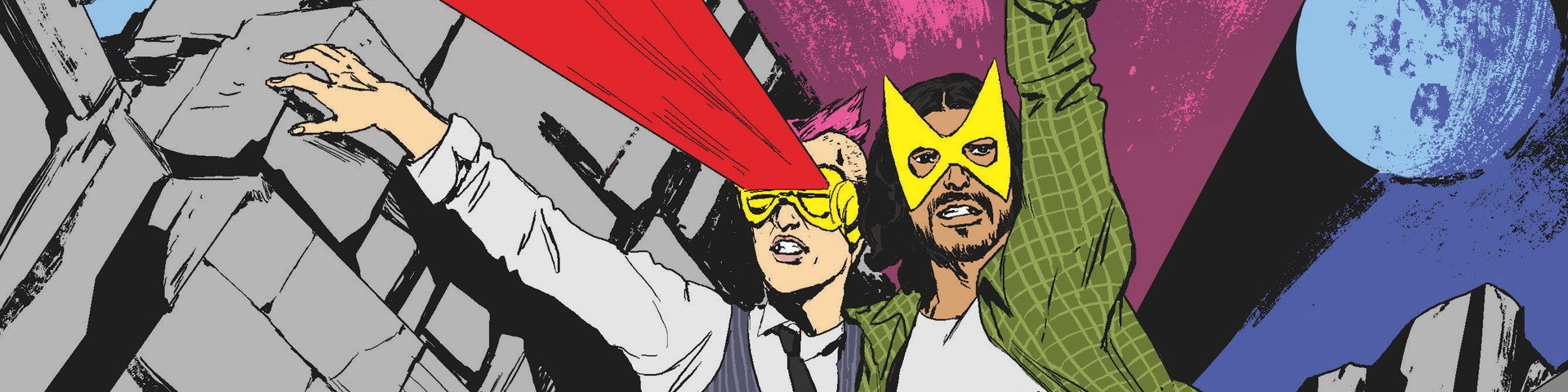
Illustration by David Wynne

And so it begins. (New X-Men #114)

That is a damn stylish credits page. (New X-Men #114)

Cerebra. (New X-Men #114)

Well, fuck. (New X-Men #114)

Charles Xavier vs. Cassandra Nova, round 2 (although you won’t officially find that out ’til later). (New X-Men #114)

These covers! (New X-Men #115)

I really like the way Morrison writes these two. (New X-Men #115)

Alas, Ugly John, we hardly knew ye. (New X-Men #115)

She’s so evil, but also so fucking weird. (New X-Men #115)


The original Negasonic Teenage Warhead. (New X-Men #115)

So, that happened. (New X-Men #115)

It may be improbable, but I legitimately like the negative-space X as a statement. (New X-Men #116)

The return of Emma Frost. (New X-Men #116)

One of the most lingering images of the run. (New X-Men #116)

Oh. That’s bad. (New X-Men #116)

That’s not Charles Xavier. (New X-Men #116)

NEXT EPISODE: Beast has a bad day.
I’m happy to read through this run again, but I feel crazy because I don’t like this the way everyone else in the world seems to like this. Frank Quitely’s art makes everyone’s face look like a pudgy, ugly pile of mashed potatoes. Quitely’s art is fantastic … unless he’s drawing faces.
Morrison has so many great ideas, but they go all-in on some plotlines that are just non-sensical. Lord, just look at the weirdest stuff from their Batman run. I’m not trying to skip ahead and ruin anything for those who are reading this for the first time, but some of the upcoming stuff just makes me roll my eyes. This era makes me think that Morrison wanted to write the X-Men, but really hated the X-Men. (Maybe just the X-Men as they were at the time).
I’ve always felt this way about these two creators, but I know I’m in the minority. Or at least I’ve always been shouted down by the majority. What I want to know is, did this bring in new comic readers, or just get people talking? Because I can’t help feeling like if I handed this book to a new reader, they’d be alienated immediately.
You may be in the minority… but you’re certainly not alone! I’ve always thought the praise for Quitely’s art was pretty overly effusive. It’s… fine. I actually think there’s other art in this X-Men run which is better.
How I’ve described the Morrison run, personally, is “The X-Men star in a Grant Morrison story.” At least that’s how I feel… until “Here Comes Tomorrow,” which is the point at which I think it becomes “Grant Morrison writes an X-Men story.” I don’t know if this distinction makes sense to anyone else, but that’s how I’ve always seen it.
As to your final point – could not agree more! Morrison’s concept-doc, from which Jay & Miles quoted extensively, talks about a fresh start, bringing in new readers, etc. Honestly… I don’t see that AT ALL. A lot of it is grounded in the past. The book is fundamentally reactionary – and giving reactionary content to people who don’t know what it’s a reaction TO really makes it hard for people to understand the reaction, you know? My subjective understanding is not that it brought in NEW readers, but rather that it reinvigorated lapsed readers. And for people of Jay & Miles particular vintage, it’s a REALLY meaningful. I just don’t know that it translates as well to anyone else, and I’d agree it’s not really a “new reader” book.
Sorry for the long reply… but you brought up a lot of interesting things in your comment! I don’t claim any special knowledge on these topics… that’s just how I see things.
I will say, this was an X-Men comic that I’d regularly hand to people who only knew them from the cartoons or movies. Like, I can think of at least 5 different non-comic fans I got interested with this run. Did it get them to read more? Well, here’s where it gets tricky, because I hated the first few issues of Whedon’s run before I gave up, so I couldn’t necessarily say “Here’s what to read next in that story” (it then became other comic recs).
I can see why folks don’t like Quitely’s style though I love it. I will say the one thing I will say is, even if you don’t like his faces, they are incredibly expressive. And his body language is phenomenal (like, the fact that he shows how body language can make people think of Superman as Superman and Clark Kent as pudgy and awkward while drawing them the same is A+). But perhaps most importantly, he’s one of the best draftsmen in that era. His work with panel layout and storytelling is innovative, fresh, and always clear. I love how this podcast differentiates between artist as cartoonist (like, do you want a pinup by that person) and artist as panel-to-panel storyteller (and many are great at both!), and I think the latter is where Quitely is in a league of his own.
Agreed on Quitely’s expressiveness. It’s not in this gallery, but on Page 12 (Digital), check out Jean glaring at Cyclops during the psychic conference — the first sign, even before Wolverine’s jabs, that something is wrong between them.